


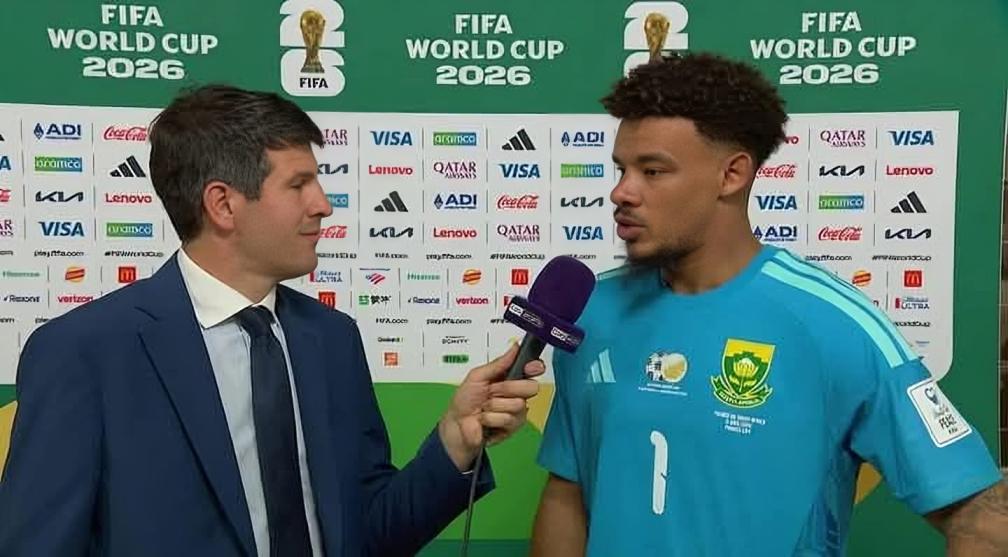
South Africa captain Ronwen Williams has called for greater unity among African nations following Bafana Bafana’s defeat to Mexico at the 2026 FIFA World Cup.
The experienced goalkeeper admitted he was disappointed by what he perceived as limited support from some parts of the African football community during the match, noting that African nations have traditionally rallied behind one another at major international tournaments.
His comments have since generated widespread discussion among football fans across the continent.
Williams Reflects on African Support
Following the match, Williams spoke about the importance of solidarity among African countries whenever one of the continent’s representatives competes on the global stage.
According to the South African captain, previous World Cups often saw African supporters unite behind teams representing the continent, regardless of nationality.
“Africans have traditionally supported fellow African nations at the World Cup, but this time it felt different,” Williams said.
“Seeing many Africans back Mexico was painful and almost brought tears to our eyes.”
The remarks quickly attracted reactions from football supporters across Africa, with many sharing different views on the issue.
Social Media Reactions Highlight Wider Debate
Williams’ comments sparked extensive conversations on social media platforms, where fans debated the reasons behind the perceived lack of continental support.
Some users suggested that historical tensions and past incidents involving foreign African nationals in South Africa may have influenced opinions among certain supporters.
Others argued that football support is often shaped by personal preferences, rivalries, or admiration for particular teams rather than broader political or social issues.
While opinions varied, the discussion highlighted how football can sometimes reflect wider conversations taking place across society.
The Shadow of Past Xenophobic Incidents
South Africa has, over the years, experienced periods of xenophobic violence in which foreign nationals from other African countries were targeted.
Those incidents received significant attention across the continent and drew criticism from governments, organizations, and citizens in several African nations.
Although many South Africans have consistently condemned such attacks, the events left lasting memories and continue to shape perceptions in some parts of Africa.
Following South Africa’s World Cup defeat to Mexico, some social media users referenced these past incidents while discussing support for Bafana Bafana. While opinions varied widely, the reactions highlighted how historical events can continue to influence conversations about continental solidarity and unity.
Williams Calls for Unity
Despite the differing opinions, Williams emphasized the need for Africans to stand together and support one another on the international stage.
“As Africans, we should stand together, support one another, and show solidarity whenever an African nation is representing the continent.”
His message focused on unity and the belief that African teams benefit when they receive support from across the continent during major tournaments.
The goalkeeper’s comments have been praised by some supporters who believe football can play a role in strengthening relationships between African nations.
Football’s Power to Unite
Major international tournaments often create moments that bring countries and cultures together.
For African nations competing at the FIFA World Cup, support from across the continent has historically been seen as a source of pride and motivation.
Whether backing a team because of shared geography, cultural ties, or admiration for its players, football remains one of the few platforms capable of creating a sense of collective identity across borders.
The debate surrounding South Africa’s defeat to Mexico has once again demonstrated how closely football and broader social issues can intersect.
What Next for South Africa?
Despite the disappointment of the defeat, South Africa remain focused on their World Cup campaign and the challenge of responding positively in their upcoming matches.
Williams and his teammates will be hoping to put the controversy behind them and concentrate on securing the results needed to keep their tournament hopes alive.
For Bafana Bafana, the priority now is turning attention back to football and proving their quality on the pitch.
Editor’s Note
Football has often united Africans behind teams representing the continent at major tournaments. However, fan support remains a personal choice, influenced by footballing preferences, history, and individual experiences.
Conclusion
Ronwen Williams’ comments have sparked an important discussion about unity, support, and the relationship between football and society in Africa.
While opinions on the issue remain divided, the South Africa captain’s message was clear: he hopes African nations can continue to support one another whenever the continent is represented on the world’s biggest football stage.
As the 2026 FIFA World Cup continues, the conversation serves as a reminder of football’s unique ability to reflect both the challenges and aspirations of people across the continent.
