


Guinea Football Federation calls on CAF to review the 1976 Africa Cup of Nations title following Morocco’s controversial walkout in the final match.
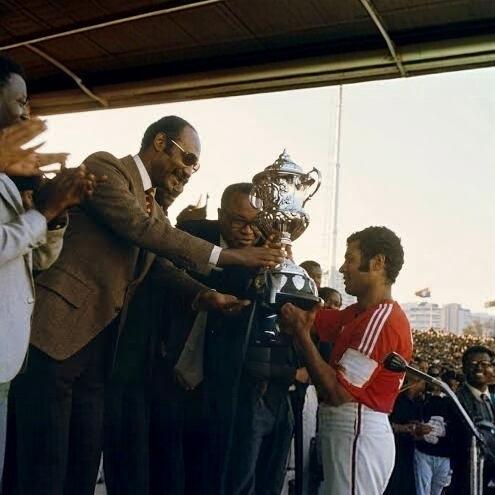
The Confederation of African Football (CAF) is under renewed scrutiny as the Guinea Football Federation officially demands a review of the 1976 Africa Cup of Nations (AFCON), which saw Morocco crowned champions.
The call for action comes in the wake of CAF’s recent decision to strip Senegal of the 2025 AFCON title and award it to Morocco, following a brief walkout by the Senegalese team in protest of a refereeing decision — a move made 58 days after the tournament concluded.
Guinea argues that a similar incident occurred in 1976, when Moroccan players temporarily left the pitch during a crucial final group match against Guinea. The AFCON 1976 did not feature a traditional final; instead, the champion was decided in a four-team final group including Morocco, Guinea, Egypt, and Nigeria.
During the decisive match:
- Chérif Souleymane gave Guinea the lead in the 33rd minute, putting them on track to claim the trophy.
- However, Moroccan players briefly walked off in protest, and upon resumption, Ahmed Makrouh equalized in the 86th minute, securing a 1–1 draw that handed Morocco the title.
Guinea now contends:
“Give us back our 1976 AFCON trophy.”
Their stance is built on principle of consistency: if CAF penalized Senegal in 2025 for leaving the pitch, the same logic should apply to historical cases.
Experts caution that retroactively applying modern regulations — including Article 84 of CAF’s rules — to events from 1976 is legally complex, as these rules did not exist at the time. Yet, ignoring the claim risks reinforcing criticism of CAF’s inconsistent disciplinary processes.
CAF has not issued an official response, leaving the controversy open and fueling a broader debate about fairness, historical precedent, and consistency in African football governance.
Highlight: The Guinean federation insists that “disciplinary principles should be applied consistently, regardless of the era,” directly linking their claim to the 2025 Senegal AFCON ruling.
